


Small acts.
Big change.
We build what rural communities in Nigeria are missing — starting with solar-powered water that costs the families who use it nothing.
See it built, community by community.
From the first borehole to the day the tanks filled. Filmed on site by the teams that built it.

Clean water first. Then classrooms. Then clinics.
We finish one programme properly before opening the next. Water is running now; education follows in 2027.
 From 2027
Education
Education
In many rural communities, schools exist, but safe and supportive learning spaces do not. Children learn in overcrowded classrooms with leaking roofs, inadequate desks, poor lighting, dilapidated bathrooms and facilities that make learning harder than it should be.
We rebuild and equip existing classrooms, creating safe, functional spaces where teachers can teach effectively and every child has a better environment to learn, grow, and dream.
Active nowClean Water
Clean Water
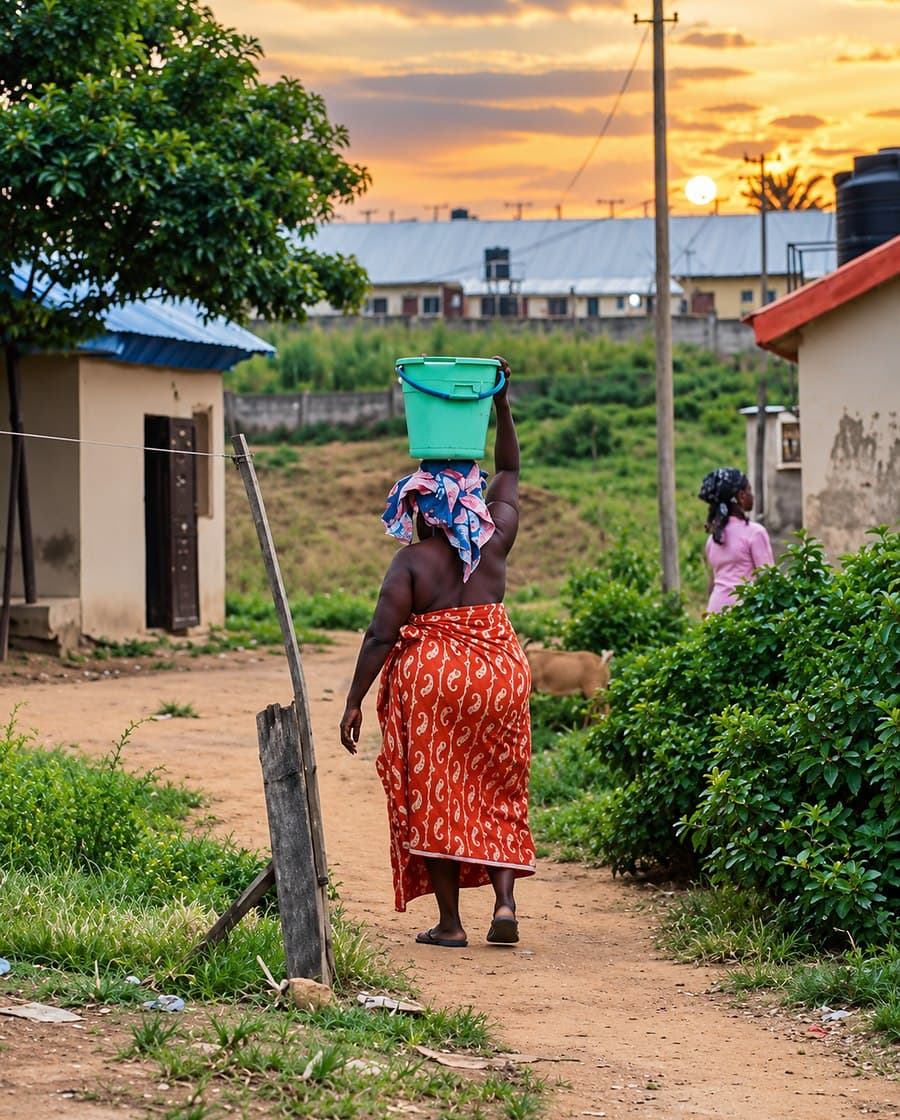
For many rural families, water is miles away. Children and parents walk long distances to streams, carrying heavy containers back home with the water their families depend on every day. What should be a basic necessity becomes a daily journey.
We bring clean water closer to home. We drill within the community, build elevated storage tanks, and power each system with solar energy, creating a reliable source of water without fuel costs. Families can access the water they need, free of charge.
Healthcare
Healthcare
A hospital should be a place people can turn to when they are most vulnerable. Yet in many rural communities, health facilities operate without enough patient beds, reliable electricity, clean water, or essential equipment. For families, even basic care can mean traveling hours in search of a better-equipped hospital.
We help strengthen the health facilities communities already depend on. From patient beds and essential equipment to solar power and clean water, we provide practical resources that help healthcare workers care for their patients safely and with dignity.
 Before the build
Water is carried by the people with the least time to spare.
Where there is no working borehole, water is fetched and carried home by hand — usually by women and girls, usually twice a day, usually before anything else can happen.
Most rural boreholes that do exist run on a generator. When the fuel money runs out, the pump stops. That is the problem solar solves.
Four parts. No running cost.
A borehole inside the community
Drilled among the homes it serves, not on the edge of town.
A solar pump and DC controller
A submersible solar pump replaces the generator completely.
Elevated storage tanks
Tanks on a steel tower fill automatically whenever the sun is up.
Free water at the tap
Gravity does the rest. The community draws water at no cost.

Every component is bought, laid out and fitted on site. Nothing is hidden behind a fence.
Three communities. Three states.
 Built
BuiltChibiri
FCT, Abuja. Families in Chibiri now have a water source closer to home. A newly drilled borehole feeds an elevated two-tank storage system, powered entirely by solar energy to provide reliable water without the recurring cost of fuel.
BuiltIlupeju
Osun State. For families in Ilupeju community, accessing water should not mean a long journey to a stream. This project brings water into the community through a solar-powered borehole system designed to provide a dependable source for everyday needs.
BuiltAbobo
Kogi State. For years, families in Abobo walked long distances to streams to collect the water they needed each day. In January 2026, that journey changed. A solar-powered water system now brings water directly into the community, giving more than 800 families a reliable source closer to home.
Gbagyi Village, Kaduna South
Kaduna State
Organisations providing the tools, training and verification behind our work.



The next community is waiting.
Every gift buys something physical: the drilling, steel, tanks and solar going in now — and the classrooms and health posts that follow.